What happens after death? What science says
Near-death experiences, the dying brain, and what science cannot say. A subject approached gently.
In brief
- Medicine defines death as the irreversible cessation of the functions of the brain, or of circulation and breathing.
- Some of the people resuscitated after a cardiac arrest describe “near-death” experiences: light, peace, a sense of leaving the body.
- Science studies these experiences, but cannot say whether they point to something beyond death or are produced by the brain under extreme conditions.
- As to what happens to consciousness after death, science has no answer.
It is the oldest and most personal question there is. This article tries to approach it gently: honestly separating what we know from what we hope, without promising what no one can promise. If you are grieving, please know that no page can take the place of having the people you love close by or, when it is needed, the help of those who do this for a living.
What medicine says
For centuries death coincided with the stopping of the heart and of breathing. With modern resuscitation that boundary has moved: a heart that has stopped can, sometimes, start again. This is why today in many countries, Italy included, death is also determined as the irreversible cessation of all functions of the brain.
Seen up close, then, death is more a process than an instant. And it is in the borderland of this process that the most studied and debated experiences arise.
Near-death experiences
Many people resuscitated after a cardiac arrest describe similar experiences: a great peace, the sensation of watching their own body from above, a tunnel, an intense and welcoming light, meeting loved ones who have already died, a review of their own life.
In 2001 the Dutch cardiologist Pim van Lommel published a study in the journal The Lancet of 344 patients who had survived a cardiac arrest: about 18% reported an experience of this kind. Other studies, such as the AWARE project led by the physician Sam Parnia, have tried to check whether people could really perceive anything during resuscitation, for example images placed high up in the rooms. The results so far have been very limited: few cases, no decisive evidence.
The brain's explanations
Many neuroscientists believe these experiences are produced by the brain itself under extreme conditions: lack of oxygen, excess carbon dioxide, the release of chemicals. Similar experiences, such as the sensation of leaving the body, can be induced by stimulating certain areas of the brain.
In 2013 a study in rats observed, in the seconds following cardiac arrest, a surge of coordinated brain activity, more intense than in normal wakefulness. In 2022 a similar case was described in an elderly man, recorded by chance on an electroencephalogram as he was dying. These are striking observations: the dying brain might be very active. But they do not tell us what the person is experiencing, nor whether anything remains afterward.
Where science stops
Science knows a great deal about how a body dies. It knows very little about how consciousness arises from the brain, and that is the crux: until we understand how the brain produces the experience of being someone, we cannot say with certainty what happens to that experience when the brain stops.
One thing physics does say with confidence: the matter we are made of does not disappear. The atoms of the body return to the cycle of nature and become part of something else. But that concerns the matter, not the person.
From here on we are no longer talking about what science has established, but about a hypothesis: the one proposed in the book Lux Lucis. It should be read as such.
The melody, not the notes
Chapter 11 of Lux Lucis is titled “You are not meant to end,” and it starts from a musical image. A melody is not the same thing as its individual notes: you can play it on a piano, on a guitar, or whistle it, and the physical vibrations are different every time, but the melody, that is, the pattern of relationships between the notes, stays the same.
In the same way, the book proposes, we are not the individual atoms of the body, most of which are replaced over the course of a lifetime, but the pattern that organizes them. And a pattern can continue beyond the medium that hosted it: in our children, in the people we have touched, in what we have given and taught.
The book goes further, in keeping with its central hypothesis: if life is matter organizing itself according to the information carried by light, at death that information would not be lost, but given back. It sums this up in one sentence: you do not return dust to dust, you return light to light.
The book does not deny the pain. It says explicitly that death is real and that losing those we love hurts, enormously. But it proposes looking at it not as a fall into nothingness, but as a transformation.
What remains open
On this subject more than any other it is right to be clear: no one knows for certain what happens after death. Not science, and not this book. The reading offered by Lux Lucis is not a proof: it is a way of looking, one that some readers find consoling and others do not, and that does not claim to replace the faith of those who believe or the peace of mind of those who do not.
Perhaps the only thing all of us can say together is that what we have loved and given goes on acting in the world after us. The rest is an open question, one worth asking calmly and without fear. On the wider relationship between these questions and science, see Can science and faith get along?
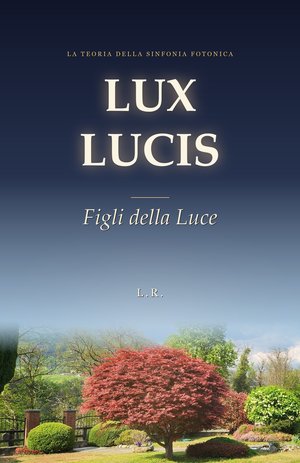
Go deeper in the book
This topic is developed in chapter 11 of Lux Lucis – Children of the Light.
Read the first chapter for free · English edition in preparation; available now in Italian and Spanish
Read next
-
Can science and faith get along?
Conflict, separation, dialogue or integration: the real history of the relationship between science and faith, and a proposal for convergence.
-
Jung's synchronicity: the scarab at the window
Coincidences linked by meaning, not by a cause. The story of the scarab, psychology's explanations and a different reading.
-
Are we really made of stardust?
The carbon, oxygen and iron in our bodies were born in stars. How much of it is true, and what doesn't quite add up in the famous phrase.