Are we really made of stardust?
The carbon, oxygen and iron in our bodies were born in stars. How much of it is true, and what doesn't quite add up in the famous phrase.
In brief
- Yes, literally: the carbon, oxygen, nitrogen, calcium and iron in your body were made inside stars.
- Hydrogen, however, is older: it formed shortly after the Big Bang, before any stars existed.
- About 90% of the mass of the human body is made of elements born in stars.
- The heaviest elements, such as gold, are born in rare and violent events, such as collisions between neutron stars.
In the beginning there was almost nothing but hydrogen
In the first minutes after the Big Bang, about 13.8 billion years ago, the universe was hot and dense enough to fuse the simplest nuclei. Hydrogen, helium and a trace of lithium formed. Then the universe cooled too much to go any further.
There was no carbon, no oxygen, no iron. Nothing of what it takes to build a rocky planet or a living being.
Stars as furnaces
The heavier elements came later, in the hearts of stars. A star is a gigantic nuclear fusion plant: in its core hydrogen fuses into helium, releasing the energy that makes it shine. When the hydrogen runs out, stars that are large enough begin to fuse helium into carbon and oxygen, then heavier and heavier elements, all the way up to iron.
The picture was laid out in 1957 in a celebrated paper by Margaret and Geoffrey Burbidge, William Fowler and Fred Hoyle, known by their initials: B²FH. Fowler received the Nobel Prize for this work in 1983.
Explosions and collisions
These elements, though, are locked inside the star. To become planets and people they have to get out. That happens in two main ways: stars like the Sun, at the end of their lives, swell up and shed their outer layers into space; much larger ones explode as supernovae, hurling their contents into the galaxy.
Elements heavier than iron need something more. In 2017 gravitational-wave detectors recorded the merger of two neutron stars, and telescopes observed its light: the cloud it produced held the signatures of heavy elements such as gold and platinum. Some of the gold in a ring was probably born this way.
From that scattered matter, mixed into clouds of gas, new stars and new planets form. Our Solar System was born this way, about 4.6 billion years ago, from material enriched by earlier generations of stars.
How much of us is stardust
By mass, the human body is made mostly of oxygen (about 65%), carbon (about 18%), hydrogen (about 10%) and nitrogen (about 3%), plus calcium, phosphorus and other elements in smaller amounts. All of them, except hydrogen, were made by stars: about 90% of our mass.
If you count the atoms one by one, though, the picture changes: hydrogen, extremely light but extremely numerous, accounts for about two atoms out of three. Those atoms do not come from stars, but straight from the first minutes of the universe. So we are made of stardust and of something even older.
The image was made famous in the 1980s by the astronomer Carl Sagan, who reminded viewers of the series Cosmos that we are made of “star stuff.”
Where science stops
This part of the story is among the most solid in astrophysics. But science describes where the atoms come from, not how ordinary atoms, the same ones that make up rocks and gas, organized themselves into something that breathes, grows and wonders where it comes from. For that, see How did life begin on Earth?
From here on we are no longer talking about what science has established, but about a hypothesis: the one proposed in the book Lux Lucis. It should be read as such.
Children of the light
The book's subtitle, Children of the Light, comes from exactly this. The stars did not give us only matter: they also gave us light. Chapter 5, “The cosmic messenger,” recalls that the light we see at night has traveled for years, centuries, sometimes millions of years before reaching us.
The hypothesis of Lux Lucis is that this light carries not only energy but also information, and that life is star matter that, under the right conditions, learns to listen to it. The stars would then stand at the origin of life twice over: as furnaces that produce the atoms, and as sources of a light that organizes them.
In this view “stardust” is not a pretty metaphor, but half of the story. The other half is the light.
What remains open
That we are made largely of elements born in stars is a fact. That starlight carries a pattern capable of organizing matter is a hypothesis, and the book does not claim to have proved it.
But even if we stay with the facts alone, there is something that deserves to be looked at with wonder: the calcium in your bones and the iron in your blood were once in the heart of a star.
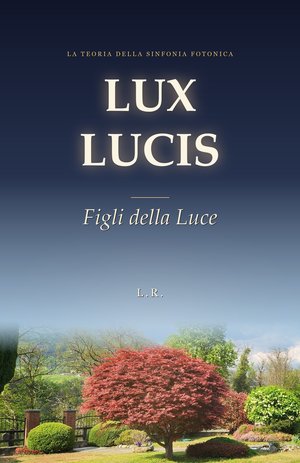
Go deeper in the book
This topic is developed in chapter 5 of Lux Lucis – Children of the Light.
Read the first chapter for free · English edition in preparation; available now in Italian and Spanish
Read next
-
Photosynthesis: does a plant “read” light?
For a plant, light is not only energy: it is information about where to grow, who is nearby and what season it is.
-
How did life begin on Earth? What we know and what we still don't
From the Miller experiment to the RNA world: science's hypotheses, their limits, and a different way of asking the question.
-
The Fermi paradox explained simply: where is everybody?
Billions of stars and planets, and not one signal. Enrico Fermi's question, the proposed answers and the idea of a galaxy that is alive but almost mute.