Home › Articles › Science and faith
Can science and faith get along?
Conflict, separation, dialogue or integration: the real history of the relationship between science and faith, and a proposal for convergence.
In brief
- The relationship between science and faith has at times been one of conflict, as in the trial of Galileo, but far more often one of collaboration or mutual indifference.
- Some of the founders of modern science were believers: the father of genetics, Gregor Mendel, was a friar; the hypothesis of a universe expanding from a “primeval atom” is owed to the priest Georges Lemaître.
- There are several models for thinking about the relationship: conflict, separation, dialogue, integration.
- Science describes how the world works; questions of meaning remain largely outside its method.
The Galileo affair, and what it leaves out
Talk of science and faith brings 1633 to mind at once, when Galileo was tried by the Inquisition and forced to recant the Copernican theory. It is a real wound, one the Catholic Church has acknowledged: in 1992 Pope John Paul II spoke publicly of the errors made in that trial.
But the story as a whole is more nuanced. Galileo himself was a believer and, echoing a remark attributed to Cardinal Baronio, wrote that the Bible teaches “how one goes to heaven, not how the heavens go.” Historians of science have shown that the idea of a perpetual war between science and religion is largely a nineteenth-century construction.
Scientists who believed
A few examples help show how varied the picture is.
- Gregor Mendel, an Augustinian friar, discovered the laws of heredity in the gardens of his monastery in Brno and published them in 1866.
- Georges Lemaître, a Belgian priest and physicist, proposed in 1927 that the universe was expanding and, in 1931, that it had been born from a “primeval atom”: the idea we now call the Big Bang.
- Francis Collins, who led the Human Genome Project, described in a 2006 book his journey from atheism to Christian faith.
At the same time, many great scientists have been and are nonbelievers. A 2009 survey of scientists in the United States found that about half believed in God or in some form of higher power, a smaller share than in the rest of the population. Science neither requires faith nor rules it out.
Four ways of seeing the relationship
The physicist and theologian Ian Barbour distinguished four positions.
- Conflict: science and faith compete for the same ground, and one of them has to win.
- Independence: they speak of different things and should not interfere. The paleontologist Stephen Jay Gould called this “non-overlapping magisteria”: facts for science, values and meaning for religion.
- Dialogue: they remain distinct, but can put questions to each other, for example about why the universe is comprehensible.
- Integration: they seek a unified vision, in which scientific discoveries and spiritual insights shed light on each other.
Where science stops
Science is extraordinarily good at answering the question “how?” How stars form, how a cell works, how a species evolved. It is far less equipped for “why?” questions in the deepest sense: why there is something rather than nothing, what the meaning of a human life is, what the good is. Not because they are the wrong questions, but because its method, made of measurements and repeatable experiments, does not reach them.
From here on we are no longer talking about what science has established, but about a hypothesis: the one proposed in the book Lux Lucis. It should be read as such.
Two lights on the same reality
Lux Lucis places itself in the fourth position, integration. Chapter 13, “The convergence,” uses an image: a person who has always lived in a room lit only by red light, until someone switches on a white light and colors appear that they did not know existed. The colors were already there; what was missing was the light to see them.
For the book, science and spirituality are two lights of this kind. Science shows the mechanisms, spirituality their meaning. And some ancient insights, reread in the light of the book's hypothesis, take on a new sense. “In the beginning was the Word,” says the Gospel of John: if life arises from matter organizing itself according to information carried by light, then “the Word became flesh” becomes, in the book's reading, almost a description of what happens.
Chapter 10, “The divine caress,” carries this idea into the realm of faith: it imagines the beginning of the universe as a caress, a gentle touch that does not impose a form but lets every possibility express itself, and in which the pattern from which life would be born, much later, would already have been imprinted.
What remains open
This convergence is a proposal, not a proof. Those who prefer to keep science and faith apart have good reasons for doing so, and the book does not claim to convince anyone who does not believe: it asks only that you look. A reader who believes will find in it a dialogue with their own faith; a reader who does not, a reflection on what science can and cannot say.
Perhaps the most important point is that the question is still alive, and that asking it with respect, on both sides, is already a step forward. For a concrete example of how a different question changed science, see The scientific revolutions born from a different question.
Go deeper in the book
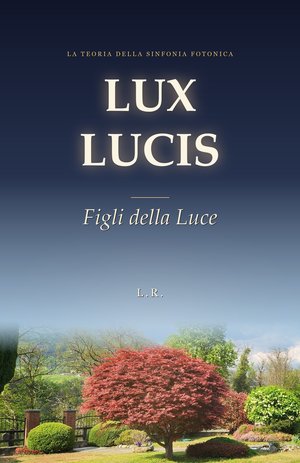
This topic is developed in chapters 10 and 13 of Lux Lucis – Children of the Light.
Read the first chapter for free · English edition in preparation; available now in Italian and Spanish
Read next
-
The scientific revolutions born from a different question
Copernicus, Darwin, Wegener: discoveries born not from new data, but from a different question. And the limit of that lesson.
-
What happens after death? What science says
Near-death experiences, the dying brain, and what science cannot say. A subject approached gently.
-
Jung's synchronicity: the scarab at the window
Coincidences linked by meaning, not by a cause. The story of the scarab, psychology's explanations and a different reading.