Home › Articles › Synchronicity
Jung's synchronicity: the scarab at the window
Coincidences linked by meaning, not by a cause. The story of the scarab, psychology's explanations and a different reading.
In brief
- “Synchronicity” is the term the Swiss psychiatrist Carl Gustav Jung used for coincidences linked by meaning, not by a cause.
- The most famous example is the scarab that tapped at the window while a patient was describing a dream about a golden scarab.
- Psychology explains many coincidences through statistics and through the way our minds look for patterns.
- Quantum physics knows a real link between distant particles, entanglement, but it does not allow messages to be sent and does not explain the coincidences of everyday life.
The scarab at the window
Jung told of a very rational patient who found it hard to let go in therapy. One day she was telling him about a dream in which someone gave her a golden scarab. At that very moment Jung heard a light tap at the window. He turned and saw an insect trying to get in: a rose chafer, the closest thing to a golden scarab you could find in those parts. He caught it, handed it to the patient and said: “Here is your scarab.”
According to Jung, the episode cracked the woman's rational armor, and from then on the therapy truly began to move forward.
What Jung meant
Jung used the term synchronicity from 1930 onward and developed it in a 1952 essay, published together with a study by the physicist Wolfgang Pauli, a Nobel laureate with whom he had a long intellectual friendship. For Jung a synchronicity is the coincidence between an inner state (a dream, a thought, an emotion) and an outer event that has no causal link with it, but has the same meaning.
Jung observed that these events seemed more frequent at moments of strong emotional intensity: bereavements, crises, turning points. He did not regard them as magic, but as the sign of a connecting principle that the science of his time did not contemplate.
What psychology says
The most widely held explanation today is less evocative, but it is worth knowing.
- Coincidences are more likely than we think. A group of just 23 people is enough for there to be a better than 50% chance that two of them share a birthday. Across billions of people and days, “incredible” events happen all the time: the mathematicians Persi Diaconis and Frederick Mosteller called it the law of truly large numbers.
- We remember only the hits. We notice and retell the time we think of someone and that person calls; we forget the thousand times it does not happen.
- The brain looks for patterns. We are built to find connections and meanings, sometimes even where there are none. It is a precious ability, but one that can mislead us.
None of this proves that synchronicities are “only” illusions. It does show, however, that before speaking of a mysterious principle we have to reckon with chance.
And quantum physics?
Quantum entanglement often comes up when people talk about synchronicity. Two particles can be prepared so that their properties remain correlated even at a great distance: measure one, and you immediately know something about the other. At first many physicists considered it an absurdity, and it was dubbed “spooky action at a distance.” Experiments, however, have confirmed it again and again; the 2022 Nobel Prize in Physics went to Alain Aspect, John Clauser and Anton Zeilinger for precisely these experiments.
We need to be precise, though: entanglement does not allow information or messages to be transmitted, and it shows up under tightly controlled laboratory conditions, not between people or objects in everyday life. It shows that nature, at a deep level, is more interconnected than we thought; it does not explain Jung's scarab.
Where science stops
Science has found no evidence of a principle that connects events through meaning. It is not even easy to see how one might look for it, because meaning is something that lives in the experience of the observer. Here the question leaves the realm of measurement and enters that of interpretation.
From here on we are no longer talking about what science has established, but about a hypothesis: the one proposed in the book Lux Lucis. It should be read as such.
The invisible network
Chapter 12 of Lux Lucis, “The invisible network,” starts from Jung's scarab itself. The book reads it as a clue to a network of connections wider than the one we see: entangled particles, forests linked underground, the recurring symbols that Jung attributed to the collective unconscious, distant cultures that tell similar stories.
In the book's hypothesis life arises from matter that “tunes in” to the information carried by light. If so, every living being would be a node in a larger network, and our minds might, at certain moments, resonate with it, like a radio that picks up a station for an instant. Synchronicities would be those moments.
The book adds an important clarification: being connected does not mean becoming an indistinct mass. The trees in a forest are connected, but each one remains a tree.
What remains open
This reading cannot be tested with today's tools, and the book does not present it as a discovery. Those who prefer the statistical explanation have good arguments; those who have lived through a coincidence that changed their life know that the numbers do not exhaust its meaning.
Perhaps the most honest thing is to hold both together: chance exists, and the search for meaning is part of what we are.
Go deeper in the book
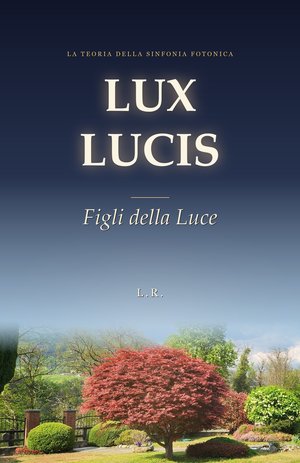
This topic is developed in chapter 12 of Lux Lucis – Children of the Light.
Read the first chapter for free · English edition in preparation; available now in Italian and Spanish
Read next
-
Do trees talk to each other? The Wood Wide Web
Fungi linking roots and chemical signals in the air: what is solid, what is overstated, and the forest as an image of a network.
-
Can science and faith get along?
Conflict, separation, dialogue or integration: the real history of the relationship between science and faith, and a proposal for convergence.
-
What happens after death? What science says
Near-death experiences, the dying brain, and what science cannot say. A subject approached gently.