Home › Articles › Trees that communicate
Do trees talk to each other? The Wood Wide Web
Fungi linking roots and chemical signals in the air: what is solid, what is overstated, and the forest as an image of a network.
In brief
- The roots of most plants live in symbiosis with fungi, the mycorrhizae, which trade water and minerals for sugars.
- The same fungi can link several trees to one another: this is the so-called “Wood Wide Web.”
- It is well documented that plants attacked by insects give off airborne compounds that can put their neighbors on alert.
- The idea of “mother” trees feeding their young through the network is appealing, but the field evidence is still debated.
A world beneath our feet
When we look at a forest we see separate trunks. Underground, things are different. The roots of the great majority of land plants live in association with microscopic fungi, the mycorrhizae. The fungus's extremely fine filaments reach much farther into the soil than the roots do: they gather water, phosphorus and nitrogen and pass them to the plant, which in return supplies sugars made through photosynthesis.
It is one of the oldest and most important alliances in nature: it is thought to have helped the first plants colonize dry land, more than 400 million years ago.
The Wood Wide Web
A single fungus can connect to the roots of several trees, even of different species, forming a network. In 1997 the Canadian ecologist Suzanne Simard published a study in the journal Nature in which, using labeled carbon, she observed carbon moving between birches and Douglas firs linked by fungi. The journal's cover headline read “The Wood-Wide Web,” and the name stuck.
In the years that followed the idea became hugely popular, thanks in part to Peter Wohlleben's book The Hidden Life of Trees and to Simard's own book, Finding the Mother Tree: old trees that feed the young, that warn their neighbors of danger, that recognize their own “children.”
What is solid and what is not
Some caution is needed here. In 2023 a group of researchers re-examined the published studies on the subject and concluded that many widespread claims go beyond the data. It is established that fungal networks exist and that some substances can pass through them; it is much less clear how often these networks actually link different trees in nature, how much material passes and whether this brings real benefits to young trees. The image of the “mother tree” deliberately feeding its offspring, in particular, has not been demonstrated.
Another form of communication is on firmer ground: the one that travels through the air. As early as 1983 some studies suggested that trees damaged by insects induced chemical defenses in neighboring trees. Today it is well documented that many plants, when attacked, release volatile compounds that nearby plants can sense, readying their own defenses in advance. Some of these signals even attract the predators of the insects that are attacking the plant.
So the short answer is yes: plants exchange signals. But their “communication” is chemical and mostly local, not an intentional conversation.
Where science stops
Science describes mechanisms: fungi, sugars, volatile molecules. It leaves open a broader question, one that is not its job to settle: how should we look at a forest? As a sum of individuals in competition, or as something closer to a collective organism? The data show both: competition and cooperation exist side by side.
From here on we are no longer talking about what science has established, but about a hypothesis: the one proposed in the book Lux Lucis. It should be read as such.
The forest as an image of the network
In chapter 12, “The invisible network,” Lux Lucis uses the connected forest as an image of something larger. If, as the book proposes, life arises when matter “tunes in” to the information carried by light, then all living beings would be nodes in one and the same network, connected in ways we see only in part.
The forest, in this reading, is a visible example of a general principle: the identity of each one also lies in its relationships. And the book asks a question: if trees do better when they are connected, might the same not be true of us?
With one caveat, which the book itself stresses: being connected does not mean losing one's own shape. The trees in a forest are joined, but each one remains different, with its own boundaries.
What remains open
The book uses the Wood Wide Web as an image, and it should be read as such: in light of the most recent research, the role of fungal networks in the life of forests should be treated with more caution than many popular accounts allow. It remains true that a forest is an interwoven system, made of subtle exchanges among plants, fungi and animals, that we are only beginning to understand.
On the same theme, in the article on Jung's synchronicity we tell the other half of the chapter: the connections that concern us.
Go deeper in the book
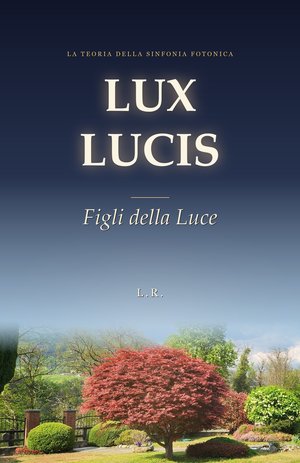
This topic is developed in chapter 12 of Lux Lucis – Children of the Light.
Read the first chapter for free · English edition in preparation; available now in Italian and Spanish
Read next
-
Jung's synchronicity: the scarab at the window
Coincidences linked by meaning, not by a cause. The story of the scarab, psychology's explanations and a different reading.
-
Photosynthesis: does a plant “read” light?
For a plant, light is not only energy: it is information about where to grow, who is nearby and what season it is.
-
Can science and faith get along?
Conflict, separation, dialogue or integration: the real history of the relationship between science and faith, and a proposal for convergence.