Home › Articles › Origin of life
How did life begin on Earth? What we know and what we still don't
Life has existed on Earth for at least 3.5 billion years. We know a great deal about how it evolved, and much less about how it began. Here are science's main hypotheses, the point where they stop, and a different way of asking the question.
In brief
- The Earth formed about 4.5 billion years ago; the firm traces of life go back at least 3.5 billion years.
- The building blocks of life (amino acids, nucleobases, sugars) form easily, in the laboratory and even in space.
- The step from molecules to a living system that copies itself has never been reproduced in a laboratory.
- The main hypotheses are the RNA world, hydrothermal vents and pools that go through cycles of drying out; none has been proven yet.
The problem: from chemistry to life
A living thing, even the simplest bacterium, is a system that does three things at once: it stores information (DNA), uses it to build its own parts (proteins) and copies itself. The trouble is that these three functions depend on one another. DNA is needed to build proteins, but proteins are needed to copy DNA. It is the classic chicken-and-egg problem, written in chemistry.
The question of the origin of life, which scientists call abiogenesis, is therefore this: how can a system of this kind have appeared from non-living matter, without already existing?
The building blocks form by themselves
The first piece of good news came in 1953. Stanley Miller, a student of Harold Urey, sealed water, methane, ammonia and hydrogen inside a glass apparatus, simulating the atmosphere the early Earth was then thought to have had, and subjected them to electrical discharges, like lightning. Within a few days the liquid changed color, and several amino acids, the components of proteins, had appeared in it.
Since then, similar experiments have produced many other biological molecules. And a laboratory is not even necessary: amino acids have been found in meteorites, such as the one that fell at Murchison, Australia, in 1969, and in the samples of the asteroid Bennu brought back to Earth by the OSIRIS-REx mission.
The conclusion is solid: the building blocks of life are not rare. The universe produces them spontaneously.
The main hypotheses
The RNA world
In the 1980s it was discovered that RNA, DNA's cousin, does more than carry information: some RNA molecules, called ribozymes, can also catalyze chemical reactions, a job we thought was reserved for proteins. The core of the ribosome, the machine that builds proteins in every cell, is itself made of RNA.
Hence the RNA world hypothesis: before DNA and proteins there would have been a phase in which RNA did both jobs, storing information and making reactions happen. It solves the chicken-and-egg problem elegantly. What remains hard to explain is how long chains of RNA able to copy themselves formed on their own in nature.
Hydrothermal vents
On the ocean floor there are hot springs where water that has seeped through the rocks rises again, rich in minerals. Some of them, such as the Lost City field in the Atlantic, discovered in 2000, form porous chimneys with differences in acidity and electrical charge running across them. They are a continuous source of chemical energy and offer tiny cavities where molecules can become concentrated. Many researchers see them as a plausible cradle for early metabolism.
Warm little ponds
As early as 1871, in a letter, Darwin imagined life beginning in a “warm little pond.” The idea has come back into favor: in volcanic pools that go through cycles of drying out and refilling, molecules become concentrated as the water evaporates, and this favors the formation of longer chains. Some clays help too: in the laboratory they favor the joining of RNA's building blocks into chains.
Panspermia
Finally, some suggest that life, or its precursors, arrived from elsewhere, on board meteorites. It is a minority hypothesis, and in any case it moves the problem without solving it: if life began somewhere else, we still have to understand how.
Where science stops
All of these hypotheses are serious, and each explains one piece. But none yet explains the decisive step: from a collection of molecules to a system that stores information, uses it and copies itself. No laboratory has ever managed to obtain life from non-living matter.
There is also a second, less familiar enigma. All living things on Earth descend from a single common ancestor, which biologists call LUCA (Last Universal Common Ancestor); a 2024 study places it at about 4.2 billion years ago. We all share the same genetic code. If life begins whenever the chemistry is right, and the early Earth was full of different environments, why do we see no trace of multiple, independent origins? Why only once?
From here on we are no longer talking about what science has established, but about a hypothesis: the one proposed in the book Lux Lucis. It should be read as such.
What if the question were a different one?
In the history of science, the most stubborn enigmas have often given way not to a more complicated answer, but to a different question. Copernicus did not find a better formula for the orbits of the planets: he moved the Sun to the center. Darwin did not find new fossils: he read the ones already there as common descent.
Lux Lucis tries to do the same with the origin of life. Instead of asking “how did random chemistry create a code?”, it asks: what if life were not born, but switched on?
The hypothesis is that light carries not only energy but also a form of information, a kind of pattern; and that organic matter, once it reaches a certain complexity, can come into resonance with it, like a tuning fork that vibrates when it hears its own note. In this view, three ingredients are needed together:
- fertile ground: liquid water, organic compounds, mineral surfaces that keep them close together;
- energy: the light of a stable star, which powers the process the way batteries power a radio;
- an antenna: molecular structures complex enough to “listen” to the pattern and organize themselves accordingly.
When the three meet, life would no longer be a statistical stroke of luck, but something like the formation of an ice crystal: inevitable, when the conditions are right.
The same lens offers a reading of LUCA as well. The first system that manages to “tune in” and copy itself consumes the molecules built up over millions of years and occupies every available niche. From that moment on, no new beginning can take hold: the window closes. A single origin not by chance, but by necessity.
What remains open
The book says so plainly: it does not know what the nature of this pattern is, nor the precise mechanism by which matter would read it. It is not a proven theory. It is a change of perspective, proposed because it holds together in a single picture three enigmas that are usually studied separately: the origin of life, the uniqueness of LUCA and the silence of the cosmos, the famous Fermi paradox.
Whether it is the right perspective, only testing will tell. But sometimes, to see something that has always been in front of our eyes, all it takes is to change the point we look from.
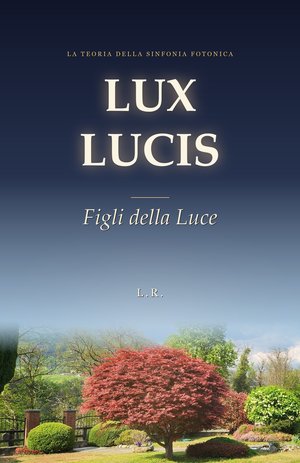
Go deeper in the book
This topic is developed in chapters 4, 6 and 7 of Lux Lucis – Children of the Light.
Read the first chapter for free · English edition in preparation; available now in Italian and Spanish
Read next
-
LUCA, the last common ancestor of all living things
All living things descend from a single ancestor that lived about 4.2 billion years ago. How we know, and what we still don't know.
-
Why did life arise only once?
On a planet full of suitable environments, a single family of living things. Science's explanations and the idea of the “closing window.”
-
The Fermi paradox explained simply: where is everybody?
Billions of stars and planets, and not one signal. Enrico Fermi's question, the proposed answers and the idea of a galaxy that is alive but almost mute.